Spain has taken great strides to become a center of gastronomy over the past decade. More than a few of the country’s eating establishments have risen to become some of the world’s most famous restaurants, including El Bulli, which I’ve mentioned on previous occasions.
Some of these restaurants serve surprising and extraordinary dishes, while others offer more typical Spanish fare. Still, others might serve just Catalan or classic Basque dishes. Both of these regions are located not far from France: From El Bulli in Catalonia in the northeast of Spain, it’s just a 30-minute drive to France. Likewise, from San Sebastian in the Basque Country in the country’s north, it’s just a half-hour drive to the French border. But while you might think that you see French traces in Spanish cuisine, you would be wrong, especially in the case of Catalan cuisine, which has no French traces. In San Sebastian, I stayed in the Maria Christina Hotel – a place I highly recommend. It’s in the perfect location for guests who want to walk or swim. The only drawback? It only has a subpar Chinese restaurant (given the plethora of Michelin-starred restaurants in the vicinity, I assume they wanted to create an alternative). Still, the breakfast is nice. Sporting a classical interior design, the Marina Christina is located in an old building, although it has been newly refurbished and restored. I stayed in Bilbao just one night, but I did not like my hotel, so if you come across any possibility, please do keep me informed. That aside, the Guggenheim Museum in Bilbao is a magnificent place; if anything, the exterior is even more breathtaking than the artwork inside. The museum is almost worth extending your trip to see. Because some high- end restaurants are often closed on Mondays, if not Sundays, I specifically chose Friday and Saturday to visit, although some places are open on Sundays for lunch. Now, in an effort to eat everywhere, you may think you can visit up to five or six restaurants in just two days by just eating light, but you really can’t: Sometimes it takes three or more hours to actually try a restaurant’s menu. That’s why it’s better to just go for a light lunch and then try the menus for dinner so that you get the full experience of the restaurant – even if that means trying fewer establishments. San Sebastian has three three-star restaurants, as well as some two-star restaurants. In fact, there was one two- star restaurant I really wanted to visit, but the lack of time put paid to that, so it’s on the list for next summer. But at the risk of raising your ire, I’m not going to mention the best restaurant in San Sebastian. That’s because I want people who visit these restaurants to make their own lists. So let me share my opinions about four of the city’s restaurants and then let me know based on your own opinions; that’ll allow us to compare! San Sebastian gets more than its share of rain, so it’s a very verdant place. That said, it’s best to go when it’s drier, so aim to head there between May and October. Be warned, however, that Europeans generally take their holiday in August, so the city might be very crowded at that time. Meanwhile, San Sebastian’s beautiful coasts are great for a beach holiday. And it would be remiss of me not to mention Biarritz, a favorite holiday destination in the French Basque Country that is just 30 minutes away. But despite the proximity, you can see that there is a distinctive cultural diversity between the two. All these restaurants are quite expensive; the cost depends on your choice of drinks. As a rule of thumb, you’re likely to pay 200 euros per person, excluding alcohol. And to ensure you get maximum enjoyment, it’s best to go to these places by taxi; that way, you don’t have to worry about parking or driving under the influence.
AKELARRE
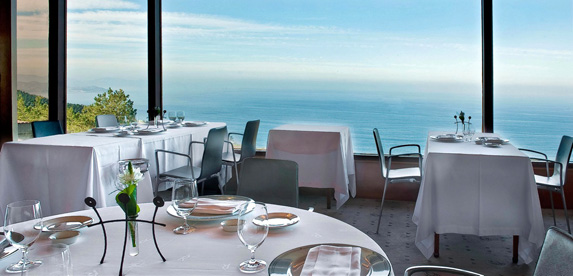 Let’s get our San Sebastian tour underway at Akelarre, which is about 15 minutes out of town. Located on a hill that gives it a panoramic view of the ocean (so it’s the place to be to watch the sunset and the full moon), this modern restaurant has seating for 50-55 people. Akelarre takes its first reservations for 8 p.m. Akelarre’s chef is Pedro Subijana, while his 35-year-old daughter also works as a manager at the restaurant. Akelarre is closed in February and in the first half of October. During the week, it is also closed on Sunday evenings and Mondays. It is possible to eat à la carte, while it also has a few gastronomical menus – the latter of which might be a good idea if you want to try more than one dish. What’s more, they can change some of the food on the gastronomical menu if there’s anything you don’t like. Akelarre serves a lot of Spanish wines, although not a lot of foreign brands. And you should especially make your way to Akelarre by taxi, as the road is windy and unlit – two things that don’t mix well if you’ve had a drink.
ARZAK
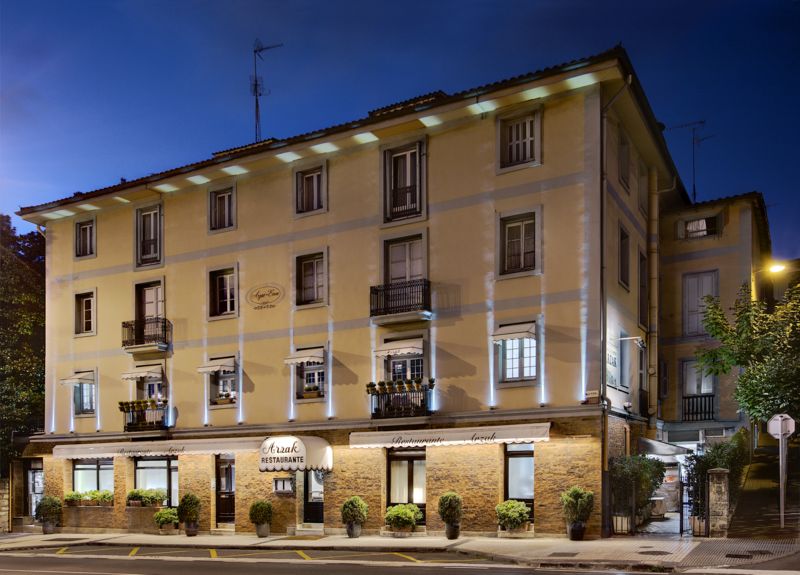 Next on the list is Arzak. Paquita Arzak established the restaurant in the 1960s, eventually bringing her son Juan Mari Arzak on board to work in the kitchen. Now 70, Juan Mari runs the show today, along with his daughter. Arzak got its first Michelin star in 1974, its second in 1978 and its third in 1989, making it the first three-star restaurant in Spain. When Ferran Adria became famous 10 years ago, everybody lined up to criticize him for serving 30 to 40 portions. Juan Mari, however, called up Ferran and asked to see what he was doing. After observing Ferran’s work, Juan Mari said he had learned a lot from El Bulli’s master and duly invited him to come to San Sebastian. Soon, the two gastronomic titans became close friends, traveling to different places around the world together and trying different food. Their close friendship notwithstanding, they have different styles and tastes. Juan Mari Arzak’s daughter, Elena, graduated from culinary school in Sweden before becoming the restaurant’s head chef. An energetic woman, Elena manages 30 people, welcomes the customers and even decides on the decoration. Scoring a reservation, however, is a tall task, so it was with a friend’s intervention that I managed to find a table at Arzak. While enjoying my remarkable meal there, I also had the chance to see their kitchen. Arzak is a complete Basque restaurant, although others in the area have become international. Arzak has two gastronomical menus, both of which mainly have meat instead of fish. I managed to get half portions for each course, which allowed me to try 10 portions that amounted to two starters, a main course and a dessert over three-and-a-half hours. Needless to say. The food and presentation were excellent. The wine menu is also a bit more international than Akelarre’s. And as a parting gift, they gave me a signed copy of a book by Juan Mari. I just need to learn Spanish first to read it.
ELKANO
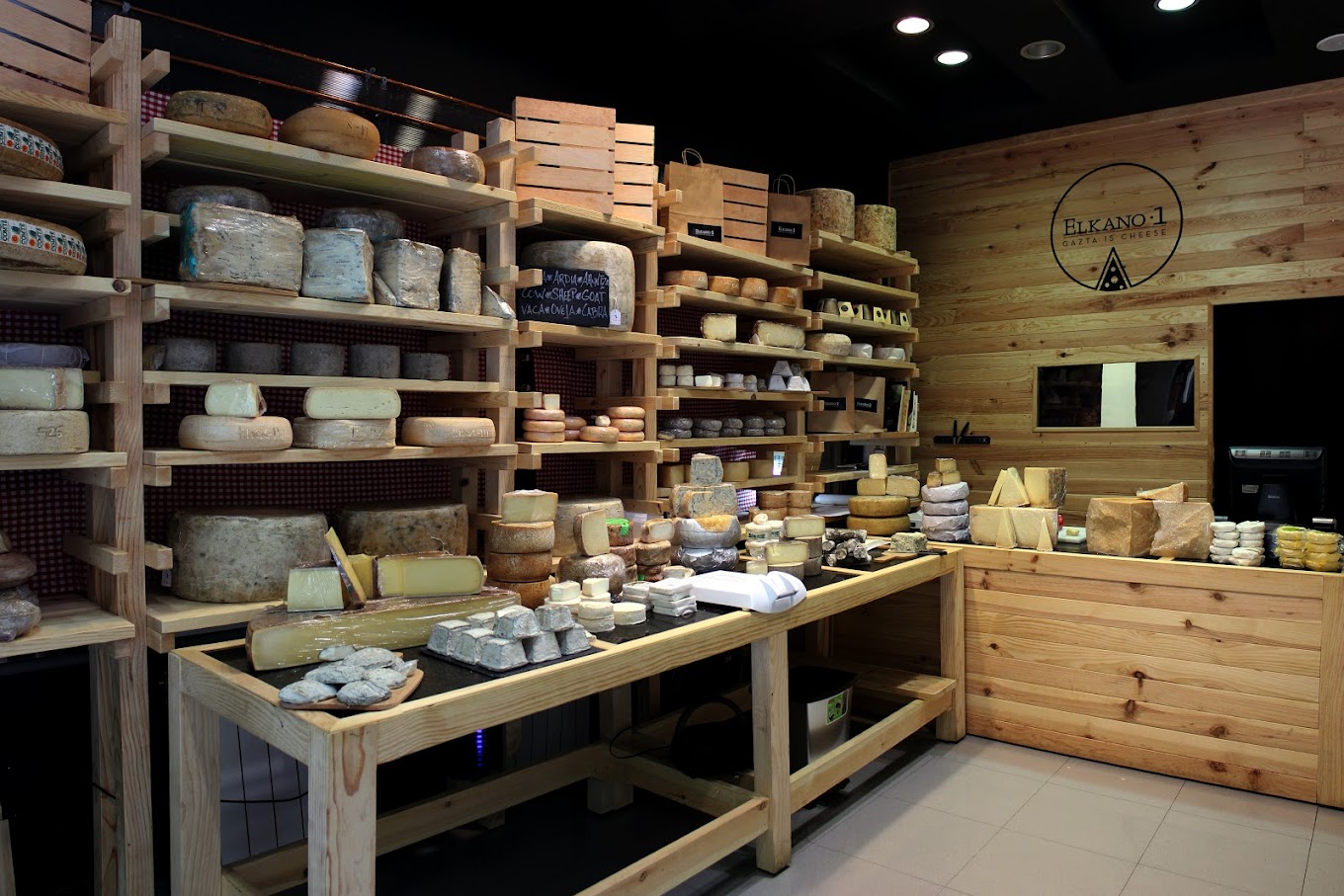 Elkano is outside San Sebastian in a small fishing village called Getaria. This year it was ranked number 30 in the 50 Best lists. It is the place to eat the best turbo in the world cooked as a whole fish on a charcoal grill just outside the restaurant next to its entrance. It’s served as a whole fish, the size depending on the people sharing it. For starters, try cod throats, red mullet, and small fresh peas if in season. Introduce yourself to the owner Aitor Arregui and congratulate him, pray for the soul of his late father, Pedro and say hello to Aitor’s son too. Ask them for live instructions on how to eat the turbo with your bare hands. The trouble is you’ll never enjoy turbo again elsewhere!
MARTIN BERASATEGUI
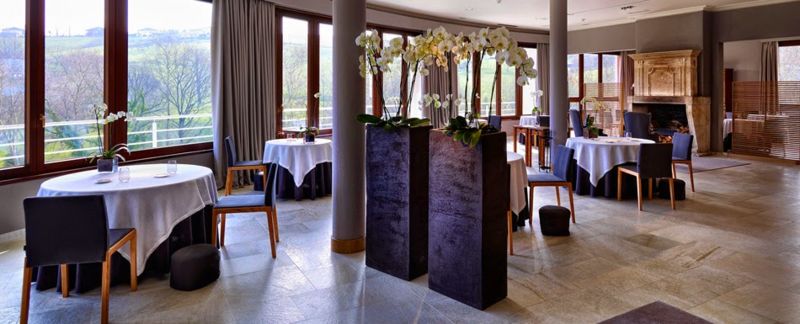 The fourth restaurant takes its name from its 50-year-old chef, Martin Berasategui. Its mesmerizing view of the forest makes it the perfect place to go for lunch. The restaurant is also quite modern and features a terrace during the summer. But it was perhaps Berasategui’s details that impressed me the most. For the first time ever, I saw packaged toothbrushes and toothpaste in the restroom – something that is very useful for customers. The waiters also speak English fluently, as well as many other languages.
SÃO PAULO
It’s a massive city that mirrors its country’s soul. The metropolis – São Paulo – might have more than its fair share of traffic mayhem and some other disagreeable characteristics, but few places are better for a holiday. When the inhabitants of the Northern Hemisphere are rubbing their hands together in a bid to stay warm during the long winter months, São Paulo offers a perfect escape for those in need of a dose of summer. There’s sun, sea and sand – not to mention some great restaurants. Here, then, are a few suggestions for your next trip to sophisticated São Paulo. There are a number of reasons why you’d want to frequently hit the road; the top of your list might be the chance to sample some great cuisine and add new discoveries to what you’ve tried before. Another might be the desire to head somewhere warm when the cold reigns at home. Of course, when it’s winter in the northern hemisphere, it takes a long time to reach a warm southern climate like São Paulo, Brazil’s largest city. The city has two hotels that are nicer a stay. One of them is the Intercontinental, a top-quality establishment that I stayed in for a decent price. What’s more, the place has a great roof lounge on the 20th floor. And if you happen to be a member of the Intercontinental, you can enjoy breakfast, lunch and dinner at the hotel for free; if not, you’ll have to shell out for the privilege. In the main, the hotel restaurants serve up a combination of Brazilian and Mediterranean fare. Perhaps one of the best things about the Intercontinental is the fact that it’s built a meter above the road. Let me explain: come the summer months of January, February and March, São Paulo gets short bursts of heavy rain – to the extent that the roads suddenly become rivers. If the hotel happened to be the same on the same level as the street, inundation would be inevitable. In such a situation, the hotel would lose power, the restaurant on the bottom floor would have to bail out the flood water and the elevator would be out of service; in short, the hotel would be in a lot of trouble. Such problems are unfortunately a fact of life at the second hotel that I recommend in São Paulo, Fasano. Nevertheless, Fasano is the city’s most luxurious and expensive hotel. In the past, I’ve happily stayed at Fasano’s hotel in Rio de Janeiro; I intended to do the same in São Paulo, only to be obliged to switch to the Intercontinental after learning about the possibility of flooding at my first choice.
FASANO
I did head to Fasano’s restaurant for dinner one night, but lo and behold, the warnings came true: When I got there, a heavy downpour had created localized flooding that inundated the restaurant. The hotel staff brought me to another nearby restaurant owned by the chain, but I can’t say that it was as exceptional as Fasano. Still, given how much I enjoyed the food at the Fasano in Rio, I was determined to dine at its São Paulo branch as well. In the following days, I duly found a chance to grab lunch at Fasano, and it’s a good thing I did; in fact, you could say the Italian hotel and its restaurant were fantastic, as the risotto and the pasta were out of this world. At both branches, they serve mozzarella di bufala – quite how they acquire the buffalo dairy product is beyond me. Now, of course, you could be right in asking why I opted for Italian cuisine in Brazil; however, if you’re not going to have grilled meat, there’s not much in the way of Brazilian cuisine to dig into except the following few places.
D.O.M.
But let me mention three other restaurants in São Paulo, one of which is D.O.M., a wonderful place with two Michelin stars. Until a few years ago, D.O.M. had successfully cracked the top 10 of the world’s 50 best restaurants, but it’s since lost a bit of its magic to fall into the 20s. In truth, the chef is a bit of a know- it-all. As the restaurant began to fall down the rankings, managers started to pay closer attention, but it wasn’t enough to prevent the loss of a Michelin star, bringing the place down to two. The chef only cooks on Fridays and Saturdays; on other days of the week, his assistants handle the task. D.O.M. is laid out in an open-kitchen concept, which offers diners the enjoyable prospect of surveying all the hustle and bustle that goes on in the kitchen. But regardless of who’s cooking, you can’t return home without trying the tasting menu. They also offer a vegetarian menu, but no matter what you’re planning on having, they’ll be sure to offer you some ants dried in the oven. If you ask me, though, it’s a bland, tasteless and completely pointless dish! It was only out of necessity that I had this food, whose taste is similar to dried pumpkin or sunflower seeds. Six years ago, at a time when it still had three Michelin stars, I ate a most enjoyable meal at D.O.M. And although I can’t quite say I enjoy its latest incarnation, it’s still a place you have to visit if you’ve come all the way to São Paulo. D.O.M. has three or four menus set at different prices – if you choose the smallest one, you can get a sense of what the restaurant’s food is all about. There’s no need, though, to try the tasting menu for wine. Instead, plump for a Chilean or Argentine wine from the wine menu. And one final note: Because D.O.M. only seats about 40 people, it’s tough to find a place to sit.
MANI
If you ask me, the place you really need to go to into São Paulo is Maní. They actually serve a set menu, but given that you get to select your entrée, main course and dessert, you basically get to choose your own menu. The portions are generous, so if you go as two people, I would suggest you choose different dishes – that way, you’ll have a better chance to taste just some of what Maní has to offer. Maní starts its service at the relatively late hour of 20.45 – meaning that if you’re there before 20.15, you’ll be confronted by a closed door. Maní also has a pleasant waiting area where you can sip a drink and place your order for your food as you wait. The fare is well worth the wait; it’s only a matter of time before Maní receives a second Michelin star – or even until it enters the list of the world’s 50 best restaurants. In fact, you might even say that Maní is worth a trip to São Paulo in and of itself – a mantle that it’s wrested away from D.O.M.
THE MUSEUMS