One of the world’s “best of best” restaurants, there’s no place quite like Osteria Francescana in Modena.
OSTERIA FRANCESCANA
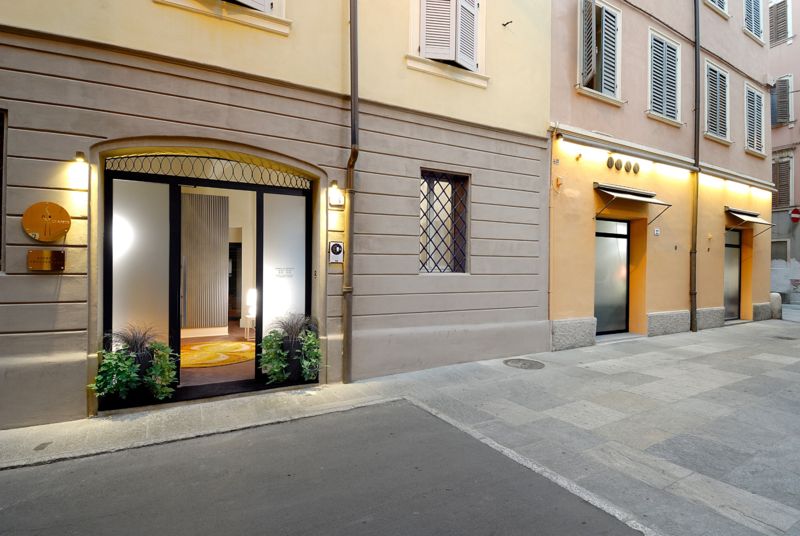
One of the world’s “best of best” restaurants, there’s no place quite like Osteria Francescana in Modena. Well-worth its three Michelin stars, it offers fairly modern Italian cuisine. The restaurant’s capacity, however, is as small as its reputation is big. The osteria has one dining room for 10 people, as well as another one for 20 people – ultimately meaning it’s difficult to find a place at one of the individual tables. If you do snag a place, may I suggest you try the gastronomical menu. But if you’re pressed for time, try three or four dishes. The dishes are served in small, non-fusion portions. Francescana goes for the minimal in its decoration, although it does have pink walls. The restaurant is also located in an alley, which can cause problems, especially as the area is closed to traffic on the weekends, meaning you might need to stretch your legs a bit if you’re arriving by car on Saturday or Sunday. But while Osteria Francescana has gained fame in the world, Modena’s hotels are not similarly up to scratch, as I couldn’t find any worth staying in.
NEW YORK MANHATTAN
For various reasons, I find myself in New York often. As someone who loves both eating and cooking, the city has always felt like an inexhaustible pantry—layered, restless, and constantly renewing itself. Each visit, depending on how long I stay, gives me the opportunity to try newly opened restaurants as well as return to places I know well.Recently, New York appeared twice in quick succession on my calendar, thanks to two weddings held a week apart. Both celebrations were wonderful, and I wish the newly married couples a lifetime of happiness.Over time, some restaurants close, others lose consistency, and new kitchens emerge that deserve attention. This recent visit allowed me to update my personal selection— adding new discoveries and reassessing old favorites.The restaurants below are listed alphabetically, not by preference. There is no claim of “best” or “better.” These are simply places that resonate with my own taste. If your path crosses New York, I believe each of them will reward your time.
AQUAVIT
Established in 1987, Aquavit has been part of New York’s fine-dining landscape long before Nordic cuisine became fashionable. Discreetly located near Central Park, it has always
favored quiet confidence over spectacle. Today, under Executive Chef Emma Bengtsson, the cooking feels calm, precise, and deeply assured. Scandinavian technique is applied to impeccably sourced local ingredients. Fish is often gently torched to preserve moisture, rested, then finished just before service. A dish that captures the kitchen’s spirit is Arctic char with dill, cucumber, and cultured cream—light, clean, and layered. Desserts are equally thoughtful, especially the apple ice cream with bitter caramel and smoked cream, one of the most memorable endings in New York dining. Lunch offers a refined experience at a more approachable price point.
Address: 65 E 55th Street, New York, NY 10022
BLUE HILL AT STONE BARNS
Opened in 2004, Blue Hill at Stone Barns sits about 50 minutes from Manhattan on a historic farm originally founded by the Rockefeller family. Under Chef and Co-Owner Dan Barber, the restaurant redefined what farm-to-table can truly mean. Menus are dictated entirely by what the farm produces that day. Even the simplest plate—the farm egg with seasonal vegetables and herbs—can be revelatory in flavor and texture. Everything except fish comes directly from the surrounding land. The dining room seats no more than 50 guests, with generous spacing, high ceilings, and a contemplative calm. The wine list is exceptional: global, intelligent, and remarkably fair, typically priced at about twice retail, with many outstanding wines available by the glass. Reservations are difficult; emailing five to six weeks in advance and remaining flexible with timing helps. Arriving early to walk the farm is an essential part of the experience.
Address: 630 Bedford Road, Pocantico Hills, NY 10591
IL POSTINO
Since 1982, Il Postino has quietly delivered classic Italian cuisine in New York, without fusion or unnecessary interpretation. Under Executive Chef Luigi Russo, the food remains confident, honest, and unmistakably Italian.My must- order dish is the seared yellowfin tuna with fries—lightly cooked, thinly sliced, and almost steak-like in texture. It is, without exaggeration, one of the best tuna dishes I have eaten anywhere. When in season, lightly steamed asparagus with butter makes the perfect companion. Finish with tiramisu, ideally with a small glass of Amaretto.Unlike many high-end restaurants, Il Postino allows you to build your own four-course Italian menu—starter, pasta, fish, dessert—an increasingly rare pleasure.
Address: 133 E 61st Street, New York, NY 10065
JUNGSIK
Jungsik opened in New York in 2011 and quickly rose to two Michelin stars. Led by Chef-Owner Jungsik Yim, it presents Korean cuisine through a modern, Western-inflected lens that feels refined and accessible.These are not traditional Korean dishes as you would find in Seoul, but thoughtful reinterpretations. A standout is the octopus with gochujang and seasonal garnishes, where balance and depth replace overt heat. Two tasting menus are available, one more extensive than the other, and the kitchen is happy to adapt dishes to personal preferences. The wine list is strong and well matched to the cuisine.
Address: 2 Harrison Street, New York, NY 10013
LE BERNARDIN
Originally opened in Paris in 1972 and arriving in New York in 1986, Le Bernardin has become one of the city’s defining culinary institutions. Under Executive Chef Eric Ripert, it continues to set the benchmark for seafood at the highest level.The iconic thinly pounded yellowfin tuna with foie gras and chives remains a masterclass in restraint. Lunch is particularly rewarding—relaxed, elegant, and far more accessible than dinner. Despite holding three Michelin stars for decades, the service is warm and entirely free of pretension.
Address: 155 W 51st Street, New York, NY 10019
MAREA
Opened in 2009 on Central Park South, Marea quickly established itself as a reference point for Italian seafood in New York. Today, even after losing its stars , under Executive Chef Lauren DeSteno, it still maintains a distinctly Roman sensibility.The defining dish is fusilli with red wine–braised octopus and bone marrow—rich, intense, and unapologetically Italian. In autumn, white-truffle dishes appear, particularly egg- based plates that elevate the menu further. Expensive, yes, but consistently rewarding. The bar is an excellent place to begin the evening. Address: 240 Central Park South, New York, NY 10019
NOBU DOWNTOWN
Nobu arrived in New York in 1994, founded by Chef Nobu Matsuhisa, and helped define modern Japanese dining outside Japan. The Downtown location remains the most authentic
expression of the brand.Recently reopened in a historic building, the upstairs space—with its dramatic ceiling height—is the place to be. The timeless black cod with miso remains flawless decades on. The menu encourages sharing, and lingering at the bar is part of the experience; the downstairs dining room is more cramped and best avoided if possible.
Address: 195 Broadway, New York, NY 10007
PER SE
Per Se opened in 2004 as Thomas Keller’s New York counterpart to The French Laundry. Overlooking Central Park from Columbus Circle, it remains one of the city’s most formal and exacting dining rooms.A signature dish, “Oysters and Pearls”—oysters with tapioca, caviar, and beurre blanc—has become inseparable from Keller’s legacy. Two tasting menus are offered, one vegetarian. Reservations are difficult and prices are high, but Per Se continues to serve as a benchmark for American fine dining.
Address: 10 Columbus Circle, New York, NY 10019
THE MODERN
Opened in 2005 alongside MoMA’s expansion, The Modern is led by Executive Chef Thomas Allan and offers one of New York’s most polished dining experiences.A defining dish is the soft-boiled egg with caviar, deceptively simple and perfectly judged. When available, the roasted halibut is also excellent. Overlooking the Abby Aldrich Rockefeller Sculpture Garden, the dining room is serene, acoustically perfect, and impeccably run. The Kitchen Table provides a more intimate, chef-driven experience.
Address: 9 W 53rd Street, New York, NY 10019
UNION SQUARE CAFE
First opened in 1985, Union Square Cafe remains a cornerstone of New York hospitality. After reopening in 2017 in a brighter, more spacious corner location, it continues under Chef Lena Ciardullo.The roasted chicken with bread salad is still a signature—simple, generous, and consistently excellent. Reservations are notoriously difficult, but arriving mid-afternoon or dining at the bar often works. This is a restaurant built on warmth, familiarity, and return visits rather than spectacle. Address: 101 E 19th Street, New York, NY 10003
NICE AND RIVIERA
The south of France is a dreamy coastal strip with breathtaking towns and beautiful cities. Whether to the east or west of Nice, there are incredible views, delicious restaurants and impressive hotels. Here, the French Riviera consists of intriguing small towns and villages right up to the Italian border. Rich families from both France and elsewhere spend an amazing time in these villages for a couple of months every year. Nice is a truly unforgettable destination thanks to its turquoise blue sea, sandy beaches, elegant streets, delicious food and vibrant nightlife, so make sure you start your French Riviera tour from there. And with the city on the Mediterranean, the cold weather of northern France is nowhere to be found here. And, as I noted above, there’s beauty all around the area: Head out 50 km in either direction from Nice’s airport and you’re bound to find somewhere beautiful. The only issue is there’s never enough time to truly experience every single town on the French Riviera, but if you can, do try and take in Cap Ferrat, Villefrenche, Monaco, Menton, Saint-Paul-de- Vence, Grasse, Antibes and Cannes.
LA PETITE MAISON
My favorite restaurant in Nice is La Petite Maison. Foodies will know it’s an amazing restaurant. It has given franchises, with branches in London, Dubai, Beirut and Istanbul, but the one in Nice is the original. The passionate Madame Nicole opened La Petite Maison, and she now runs it with her daughter and sister. I’ve had the chance to go to a few La Petite Maisons around the world; they’re all nice, but the one in Nice is something else, especially as Madame Nicole’s presence in the restaurant creates a different kind of spirit. Another good aspect of the restaurant is that they have live music on Friday and Saturday nights from 10:30 p.m. to midnight. Thankfully, though, it’s not noisy or disturbing at all. There are no mics or speakers – just a couple of musicians making music between the tables. Whatever you do, take some time to dine at La Petite Maison when you’re in Nice. And if you’re going there for lunch, you can enjoy the terrace; the terrace is also a good choice for dinner on warm summer nights.
LA VOILE D’OR
Head out east from Nice, and you’ll soon come to Cap Ferrat, where my favorite hotel is La Voile d’Or, a small place by the sea. Now, most beaches in the area are public, but La Voile d’Or’s visitors can get exclusive access to the hotel’s beach, meaning it’s never that crowded. And because the wind typically blows from the coast to the sea, the water is always brilliant. The hotel’s restaurant, meanwhile, is also a favorite of mine.
LA MERE GERMAIN
Along the coastal strip, Villefrenche-sur-Mer comes after Cap Ferrat. Villefrenche is a stunningly beautiful village with an amazing coastline and numerous restaurants. In fact, Villefrenche is a modern fishing village, meaning the Côte d’Azur’s best fish are in town. My favorite restaurant here is La Mère Germain (est. 1938), which has delicious food and wonderful service. Run by the founding family’s fourth generation, La Mère Germain is growing day by day – by the time they reach their centennial in 2038, they might have taken up the whole coastline. While La Mère Germain is always full of people waiting to get in, the neighboring restaurants are mostly empty. The establishment owes this success to its two bosses, who happen to be brothers as well. At La Mère Germain, they do all the jobs without letting their egos get in the way. After Villefrenche-sur-Mer, our next stop is the Principality of Monaco. It’s a small country, but you can also think of it as a large company with a king as its CEO. Invest in a good real estate opportunity and say goodbye to income tax with a Monaco passport – a great way to head to Europe or the U.S. with ease if your present passport doesn’t afford you such an opportunity.
HOTEL DE PARIS
It’s no surprise that there are many restaurants in this grandiose country. You’re spoiled for choice, but the best one is Hôtel de Paris, which boasts more than a few stars. Alain Ducasse is on the scene with his restaurant, Le Louis XV, for those willing to part with a pretty penny by the end of the night. You even have a chance to see the great man himself often at this restaurant, as well as the newest dishes and the oldest tasting
menu. If you want to come here and pay “less,” the place is also open at noon. But if you’re not in the habit of spending money at a three-starred restaurant, Café de Paris, right across from Le Louis XV offers good fare for a tenth of the cost. Just don’t order Café de Paris steak, because there isn’t any! They removed it from the menu a long time ago, but apparently, the news hasn’t traveled far because there’s always at least one person at every table that wants to order it. As for me, I can’t really fathom why they don’t include such a popular dish on their menu. And here’s another useful tip for Monaco: carry your passport with you if you want to cheer up with a little bit of wine and fun at the casino.
HOSTELLERIE JEROME
La Turbie is a very small beautiful village uphill from the coast. There is a famous little hotel there with an extraordinary restaurant: Hostellerie Jerome. You should either visit La Turbie for a few hours and have lunch at Jerome and go back. But be careful with the wine, as the wine list is extraordinary and tempting. Or, go there for dinner and indulge yourself to the wine list with the extraordinary food and sleep at the hotel after dinner. Next morning enjoy a Michelin star breakfast at the hotel or a smaller one at one of the beautiful cafes of the village square. You will be happy either way to enjoy some countryside silence after the buzz of Cote d’Azur.
MIRAZUR
The last stop before Italy is Menton, the home of the world’s
best restaurants, Mirazur. Heading up the restaurant is an Argentine chef who cooks French dishes. If you want ironed cotton tablecloths like me, they’ll immediately bring one. If you don’t, you’ll be eating at a wooden table. And given the location, you won’t be surprised to hear that it has an unreal view. Mirazur was selected as the best restaurant in the world this year.
LA FIGUIER DU SAINT ESPRIT
Back in the other direction, to the west of Nice, is Antibes. Le Figuier du Saint Esprit is a restaurant managed by Christian Morisset, a famous mustachioed chef who has worked in two or three Michelin-starred restaurants along the Côte d’Azure. After Morisset decided to start his own business two years ago, he established this restaurant in a village called Saint Esprit, serving up delicious French meals and high-quality wine. Morisset himself is in the kitchen while his wife organizes the service. And to allow diners to know what is happening in the kitchen, he put up a big-screen television on the wall for the customers. There’s so much going on in the kitchen come rush hour that you’ll hardly talk to those at your table. Consciously, though, he decided to keep this place at a single star, although that obviously doesn’t mean it is short on any quality. The restaurant was built around a fig tree located in the very middle – the very fig tree after which the restaurant is named (and from which you can still eat if you so desire). French restaurants are generally closed on Sundays and Mondays, but Christian Morisset opens on those days, closing only on Tuesdays. Though perhaps less well-known than other places along the French Riviera, Le Figuier du Saint Esprit is certainly worth a trip thanks to its delicious food and great atmosphere.
CANNES
Back on the road, it’s time to head to Cannes – the summer playground for the rich. Come Easter, houses that sit empty for six months of the year start to fill up once more. And by July or August, it’s nearly impossible to walk on the street. It’s also so crowded that the beaches are full, regardless of the time of day, meaning that if your hotel’s own private beach is full, there will most certainly be no room at the public beach. The best time to come here, accordingly, is in September and October. By fall, however, the restaurants have become more spoiled, and the waiters are more than a little tired. I reckon the best time to come is at the beginning of June, right after the Cannes Film Festival. More than that, you can even see that Turkish is competing with Russian in its quest to become the second language on the streets of Cannes if you wait for school to end before coming.
LE PARK 45
My favorite restaurant in Cannes is Le Park 45, which has one Michelin star at a location somewhat removed from the street noise. Le Park 45 also has a head waiter who is French but who spent his childhood in Istanbul, so you’ll love hearing him speak Turkish if you happen to know it. And best of all, if you have a good wine with you, bring it along, as you’ll only have to pay a small corkage fee. And while you’re in Cannes, make sure you have a few snacks and a glass of wine on the terrace of the Carlton in the afternoon.
COLOMBE D’OR
Continuing a bit more to the west toward the mountains, we arrive at Saint-Paul-de-Vence to eat at Colombe d’Or. Tables with white tablecloths in the garden are at your service when the weather’s nice. But it’s not a problem if it starts to rain while you’re eating, as there are tables available inside as well.
CHATEAU SAINT MARTIN
In Saint-Paul-de-Vence there is a hotel called Château Saint Martin. Beautiful and expensive, it’s not a place that you need to stay in, but it is a must in terms of lunch or dinner. For me, it’s a place imbued with special meaning, as I celebrated my 40th birthday in this hotel, as well as my 60th. If all goes well, I hope to celebrate my 80th here as well, and maybe even my 100th!
VIEUX NICE
If you’re in Nice on a Sunday, definitely visit a marketplace. Skip the hotel breakfast and head for Vieux Nice, the old center where the town was formed a thousand years ago. Covered with stone buildings, there’s a big marketplace in the middle of buildings. The market is open seven days a week, but Sunday is the big day when farmers from nearby villages sell their fresh products, from eggs to tomatoes, mushrooms and cheese. The market opens at 8 a.m. and closes at 1 p.m., as there’s nothing left by that time. Coincidentally, all Nice- Istanbul flights are after 1 p.m., so you could, theoretically, do your weekly grocery shopping in Vieux Nice, hop on a plane back to Istanbul and
enjoy fresh ingredients from the Riviera all week long. I prefer to buy cheese, zucchini blossoms, baby asparagus and mushrooms. Cafes and restaurants also abound in the marketplace, so you can dig into breakfast in one of them after a bout of shopping (although I myself prefer to pick up food and eat as I stroll the market before hitting up a cafe for coffee or tea). Whatever the case, I can’t imagine being in Nice on a Sunday and not going there.
SOCCA/PISSALADIERE
One of the most enjoyable things to do while you’re strolling the market is to eat Socca cooked by a middle-aged lady in the market. Socca is a type of pancake made with olive oil and chickpea flour. First, you turn the dough into a liquid and then pour it into an iron plate in a thin layer. After cooking it, you take it out, put it into a roll and serve. The specialty pizza from Nice has nothing but the olive oil in its dough, along with fried onion on top – there are no other ingredients involved. It’s actually a delicious food for the poor. When in Nice, definitely try a piece of this vegetarian pizza.
OSAKA
Tokyo has pride of place in Japan, but the most important cities after the capital are Osaka and Kyoto. For people from Turkey, it’s never been easier to get to Osaka, as Turkish Airlines now flies there directly. We hit up Osaka, staying in the Imperial Hotel to get a feel for both it and Kyoto. The hotel includes a sushi restaurant, a classic Japanese restaurant, as well as a Chinese restaurant – all of which are good options if you want to grab a bite on the go. We landed in Osaka no sooner than we headed to a typical Japanese restaurant called Taian.
TAIAN
The sushi was good, as were the other Japanese meals on the menu. Taian only has seating for 20 at the sushi bar and 10 at the tables. Four or five sushi chefs are hard at work behind the sushi bar who, if you’re lucky, will occasionally give you a few small treats if you’re sitting right by them. Now, the tradition at a Japanese restaurant is as follows: When you call for a reservation, they immediately tell you about the price of their menus, and you choose your preference right at that moment. At the same time, you also indicate the ingredients that you won’t eat. Thanks to this, your menu is ready when you arrive at the restaurant! What’s more, everything is prepared right in front of
you. And when you ask for the wine menu, they’ll just ask you to choose between white and red; now, you might think that they have separate menus for white and red, but you’ll soon realize that there are just two types of wine – no lists, no menus, just two types of wine. This is mostly the case everywhere – even in three-star restaurants. Thankfully, however, Taian had a decent wine list, which meant we had a wonderful meal with wine.
DOJIMA&HUMAN
While at Taian, we started to chat with a retired Japanese surgeon at the next table. The restaurant we had lined up for the day after was really far away and, to be honest, I wasn’t eager to go there. I duly asked for some restaurant advice from this gentleman, who now spends his days enjoying his retirement with his wife. I wanted a nice, normal place that the locals enjoyed – something without a Michelin star. He gave us a card with the address, in Japanese, of one of his top restaurants. Thanks to the efforts of a cab driver, we were able to reach the restaurant, a sushi place with room for a maximum of 15 people. They didn’t ask about our menu choices beforehand, as most places do, but they did ask us for our preferences. We plumped into different choices of sushi, which they prepared wonderfully. It was only later that I learned the place’s name: Dojima and Human.
PARIS
Paris, with its museums, architectural texture, magnificent views, and the romance it offers, is undoubtedly one of the most beautiful cities in the world. It is possible to experience the finest examples of French cuisine—recognized as one of the world’s best cuisines—at the restaurants of Paris. In this city, there are hundreds of wonderful restaurants, some included in guides and some not, some Michelin-starred and others not. And new ones are constantly being added. That’s why every trip to Paris brings along a new surprise. French cuisine ranks first among the world’s cuisines. Within Paris’s magical atmosphere, eating exquisite dishes that have turned into a true art is another privilege. Since I often travel to Paris for business, I make a point of trying new restaurants each time. My list of favorites keeps changing and growing. A few months ago, I stayed in Paris for a while, continuing my work but also taking the opportunity to dine at some great restaurants. As you know, Paris is a very frequently visited destination. It’s romantic, it has a strong culture, and of course, it is also the very heart of French cuisine—the world’s best. The culinary scene in this city is constantly evolving.I will tell you about 12 Paris restaurants. Some of them have three Michelin stars, some have one, and some have none at all; but each is a place where you can say, “I had a great meal in Paris." Perhaps you’ve already been to these restaurants, but if you haven’t, I hope you’ll make the effort to go.
ANONA
The first restaurant I’ll talk about is Anona, run by a young team led by chef Thibaut Spiwack. This Michelin one-star restaurant also holds the Green Star certification, a quality label for environmentally responsible establishments. Sustainability criteria like using seasonal and local ingredients, limiting waste and water consumption are essential for this certification.As in many French restaurants, Anona offers a lovely lunch menu—at half the price of the dinner menu. If you want a proper dinner menu here, you’ll pay over €100. But at lunchtime, if you choose the three-course menu (starter, main, dessert), you can experience Anona for a very reasonable €49. The contents of this three-course menu are determined by the chef; you only specify your preferences, like meat or fish. Wine pairings are available for each dish at an additional cost. One interesting dish here is scallops. In France, fresh scallops are easily available, so I always try to eat them when I’m there. Among the starters, I also like the baby leeks served with mustard sauce. Another dish I recommend is the Corsican squid with beetroot, prepared with a hint of spice.
ARPÈGE
Arpège, where the famous chef Alain Passard has been creating wonders for nearly 25 years, is a beautiful Paris restaurant with three Michelin stars. Passard also considers himself a gardener, since all the vegetables and fruits he uses are grown in his own garden just outside the city. Strangely enough, despite this, the restaurant does not have a Michelin Green Star.Other ingredients—meat, poultry, fish, cheese—are sourced from the same suppliers he has worked with for years, all organic and additive-free. This way, he offers an organic
menu. If you choose the vegetarian menu, dessert might be a crème brûlée made with milk and eggs. If you opt for the vegan menu, you’ll get a fruit platter with exotic fruits from his garden.It’s remarkable that Passard, now nearly 70, still works in the kitchen himself. Many chefs of his caliber expand their brands, opening restaurants in London, Las Vegas, New York, or Dubai, handing them to their protégés while only occasionally checking the menus. Passard has chosen not to follow this path; he runs only this one restaurant, and when I visited the kitchen, he was personally cooking.Don’t miss Arpège—it’s a fantastic dining experience. And if you want it to be more affordable, as with all two- and three-star Paris restaurants, I recommend going at lunchtime.
AUBERGE BRESSANE
Some restaurants make me wish I lived upstairs so I could eat there every day. Auberge Bressane is one of those places. Run by chef Jean-Pierre Vullin, this restaurant’s cuisine is influenced by France’s western coast and a touch of Burgundy, which is evident from the wine list: very few Bordeaux wines but plenty from Burgundy. It’s a white-tablecloth restaurant with comfortable seating and reasonable prices. With a capacity of 30–40, it expands in summer with outdoor seating. It’s always fully booked at lunch and dinner, so reservations are essential.One of my favorite things here is the soufflé. When you order it, they bring you a beautifully puffed cheese soufflé, which is enough to satisfy your starter needs. At dessert, there are 8–10 varieties of sweet soufflés (chocolate, almond, vanilla, etc.), but they’re too sweet for me. In truffle season, I love the truffle pasta: you’ll want to wipe up the sauce with a piece of baguette.They also offer excellent local fish, sometimes daily specials not on the menu. Tables are usually for 6–8 people, so a group of 10 would have to split. The waiters all speak English, and there’s an English menu. For traditional western French cuisine, Auberge Bressane is a delight.
AUGUSTE
Auguste is a Michelin one-star restaurant offering a wide variety of dishes, with a focus on seafood. Chef Gael Orieux has also written cookbooks. His Cuisiner la mer features 90 seafood recipes (seabass, mackerel, whiting, abalone, oysters, prawns, etc.), while his Cuisiner la terre covers vegetables and fruits with 80 recipes.At his restaurant, he serves dishes from both books. I usually go for the crayfish and seabass—they’re always prepared perfectly. The monkfish, however, was slightly overcooked the last time I had it, so I’m hesitant to recommend it.As with other starred restaurants, lunch is more affordable. Salads are also excellent. Start with one, have crayfish, then your fish. Don’t forget the cheese platter: you can even request only goat cheeses or only blue cheeses.For dessert, both the crème brûlée and the chocolate soufflé are superb—the latter made with very dark chocolate and served with cream, and optionally ice cream. With its relatively moderate prices, Auguste is one of the restaurants I never miss in Paris.
BENOIT
Founded in 1912 as a bistro by Benoit Matray, Benoit remained a family business until 2005, when Alain Ducasse’s Maison Ducasse acquired it. Ducasse has preserved its spirit while adding his touch.It’s a restaurant where you can enjoy reasonably priced lunches and dinners. Alongside à la carte options, they also offer a fast lunch menu: starter + main, or main + dessert, designed to be finished within an hour. It’s popular with French businesspeople at lunch and with women meeting after shopping. Apart from Ducasse’s profiteroles, there are other signature dishes under his name. Centrally located and convenient, Benoit remains a charming spot.
BRIGITTE
Brigitte is the central France version of Auberge Bressane. Brigitte is almost 100 years old, with a simple menu of classic French dishes like onion soup. The menu always includes vegetables, while fish depends on the daily catch.You may have scallops as a starter and monkfish sauté as the main—both excellent. A sweet wine at only €7 a glass is remarkably cheap, since the bottle costs €25 wholesale, and the restaurant sells it at €29. I found this very fair. Brigitte is a great value-for-money option for lunch or dinner.
DOKI DOKI
Hand rolls occupy a unique and revered place in Japanese cuisine. They must be crafted fresh and eaten the moment they’re made. Any delay—whether in the journey from the kitchen, a pause at the bar, or a wait at your table—dulls the experience entirely. A perfect hand roll balances three contrasting sensations: warm rice, cold seafood, and crisp seaweed. The first bite should offer a satisfying crunch from the nori, followed by the clean, cool flavor of the seafood and the comforting warmth of the rice. When time interferes, that delicate harmony collapses—the rice cools, the seafood warms, and the seaweed, once brittle and fragrant, turns soft and lifeless.The ritual of eating a hand roll is intimate and immediate. Ideally, you sit at the counter, where the chef prepares and passes each roll across the counter seconds before you take a bite. It’s a fleeting, almost ceremonial exchange between chef and guest, rooted in respect for freshness and precision. In Paris, a small chain of four restaurants has embraced this philosophy with remarkable fidelity. Though their menus also include soups, small plates, nigiri, chirashi,
and a few desserts, hand rolls are the centerpiece—the reason to come. Diners can order a set of six, served sequentially, each arriving roughly every five minutes. The next roll is not made until the previous one has been eaten, preserving the perfect temperature and texture balance.The best hand rolls, contrary to popular belief, are cylindrical rather than cone-shaped. The cone form tends to lose its crunch as you reach the end, while a proper cylindrical roll—about the length of a cigarette and the thickness of a cigar—maintains its structure from the first bite to the last. Three or four bites are all it should take.This meticulous approach defines Doki Doki, whose four Paris locations have become a quiet sensation among sushi lovers. Although the concept traces its origins to the United States, the Paris outposts elevate the craft to an art form. Each roll arrives as it should— warm, cool, crisp, and gone in a few unforgettable bites.The ambiance at Doki Doki perfectly complements the precision of its cuisine. Each location follows a minimalist aesthetic—clean lines, warm wood, soft lighting, and an unspoken calm that lets the focus remain on the food. The counter is the heart of the space: sleek and narrow, with chefs moving quietly and efficiently behind it, assembling each roll with a kind of restrained choreography. There’s no clutter, no unnecessary motion—just the rhythm of rice, seaweed, and fish meeting in perfect proportion.Seats are few, which is deliberate. The experience is meant to feel personal, almost private. Conversations tend to fade into murmurs as diners wait for their next roll, watching the chef’s hands rather than their phones. The soundscape is subtle—perhaps the quiet hiss of the rice pot, the soft rustle of nori, and a trace of ambient jazz or Japanese lo-fi humming in the background.Clientele ranges from local Parisians who have adopted the place as a quiet lunch refuge to visiting food enthusiasts who’ve heard whispers of its excellence. Many discover it by chance, others make a pilgrimage after hearing that it’s the place in Paris to experience the hand roll properly—fresh, fleeting, and unforgettable.In a
city defined by its devotion to dining, Doki Doki stands apart. Paris has long celebrated the long lunch, the tasting menu, and the art of lingering over food. Yet here, the experience is the opposite—immediate, ephemeral, and focused. Each hand roll lasts barely a minute, but in that minute, everything matters: timing, texture, temperature, and technique. It’s a kind of culinary haiku—short, precise, and deeply satisfying. And perhaps that’s why, in the city of long meals, this briefest of Japanese rituals feels so perfectly at home.
DIVELLEC
This one-star Michelin restaurant is bright and elegant, with white tablecloths, comfortable chairs, and reasonable prices. Located centrally on a corner, it has two dining rooms: one seating 20 and the other 10. At lunch, only the larger room is open, offering a view of the street; in the evening, both are open.It’s relaxed, with enough space between tables for easy conversation. The menu is à la carte, and prices are moderate despite the quality.They serve only seafood and vegetables: scallops, crayfish, sole, sashimi of tuna, salmon, or seabass, and even a tuna tartare version of the French classic steak tartare. A delightful place for fresh, well-prepared seafood.
KEI
Kei, a three-Michelin-star restaurant, is run by Kei Kobayashi, a Japanese-born but French-raised chef who cooks exclusively French cuisine. There is no Japanese influence. It’s a very elegant, 20-seat restaurant with white tablecloths and comfortable chairs. Once you specify your meat or fish preferences, the menu is served—accompanied by amuse-
bouches before and after the main courses.As in other three-star restaurants, they send you home with a small treat package. Intimate, refined, and absolutely top-tier.
LE PUR
Located inside the Park Hyatt hotel, Le Pur has one Michelin star. It’s closed on Sundays and serves only dinner. The food is light, the service is wide-ranging, and the prices are reasonable for its quality.On earlier visits, I found the wine program lacking, but recently I noticed two female sommeliers had joined. They created brilliant wine pairings—even adapting spontaneously when we replaced the meat dishes with fish. Each explained the wines in detail, introducing me to labels I hadn’t known before.Le Pur passed my sommelier test with flying colors.
MONSIEUR BLUE
This restaurant is lively, with all age groups, background music, a big bar, and a view of the Eiffel Tower. You can dine in the garden in summer or inside in winter.I’ve been here a few times for business dinners and enjoyed it. There are two dinner seatings: 7:30 and 9:30. If you want a quick meal, book the first; if you want to continue into the night with drinks and music, choose the second.As the evening goes on, the music livens up, the place turns into a quasi-nightclub, with stylish people and sometimes celebrities creating an energetic atmosphere. Unlike stiff French restaurants, Monsieur Blue offers fun and vibrance.I once brought my daughter and her friends here for the second seating—they loved it and stayed for hours without boredom. It’s not a place for quiet fine dining, but for lively, fun evenings with an Eiffel Tower view at reasonable prices.
NANAUMI
Nanaumi is a genuine Japanese restaurant, run by a Japanese chef and two Japanese women handling service. I usually eat eel at Japanese places. The eel’s skin is removed, it’s cut into pieces, seasoned, and cooked in a special sauce that is replenished daily for years, gaining refinement over time. If a restaurant has been around 20 years, its sauce is also 20 years old. Each restaurant’s sauce is unique.At Nanaumi, the eel and its sauce were fantastic. The eel’s taste took the lead, with the sauce in the background— just as I like it. Highly recommended.
YOSHINORI
I stumbled upon Yoshinori by chance. Thinking it was a Japanese restaurant, I went in—but it turned out to be a French restaurant with Japanese influences. Located in Saint-Germain- des-Prés, in a street filled with small Japanese restaurants (some Michelin-listed), Yoshinori is run entirely by chef Yoshinori Morié. He does everything: takes orders, cooks, serves, and explains the dishes.With only 12 seats (three 4-person tables), he has managed to earn a Michelin star. There’s no fixed menu— he prepares whatever he feels like, based on your meat/fish preferences given at reservation. The open kitchen lets you watch him work, and though there are no tablecloths, the chairs are comfortable and the atmosphere is cozy. Centrally located and utterly unique.
THREE MICHELIN STARS BURN A HOLE IN YOUR WALLET
Restaurants aiming for three Michelin stars usually serve amuse-bouches at the beginning, end, and when bidding farewell. Some win the third star, others don’t—but without such gestures, they have no chance. At three-star restaurants, dinner for two costs at least €500, excluding wine. With wine, it can climb much higher. I believe these prices are exaggerated, and there’s no need to frequent such places regularly.
WHY IS A WIDE WINE LIST GOOD?
A broad wine list has many advantages. If you’re knowledgeable, you make your own choice. But if there’s a skilled sommelier, you can learn something new. You might discover an unusual wine at a reasonable price through their suggestions, broadening your horizons.To achieve this, a sommelier should ideally have access to at least 1,000 wines. In Turkey, that’s rare. But in Paris, the restaurants I’ve called “good wine list places” have cellars with at least 2,000 bottles. In fact, the economic value of such a cellar may exceed the restaurant itself.
RIO
Rio de Janeiro is one of the most enticing destinations in South America; it’s also the city that has stolen my heart many times. But with its beautiful beaches, friendly people and surprising restaurants, I’m sure it would steal your heart too. Rio obviously never gets particularly cold, but it’s probably best to go there between November and March. When I first went to Rio three decades ago, the place had a lot of economic problems, like inflation and currency devaluation, that also fomented chaos on the streets. Everyone warned us to be careful while walking outside; we took the advice to heart and generally steered clear of the streets. Years later, I decided to go to Rio with my daughter as we were planning to go; however, I learned that one of my university friends had since moved there, settling down after marrying a Brazilian woman. Now the owner of a tourism agency, he related his lovely story of how he ended up in Brazil. My friend told his family that he wanted to go on holiday to South America after graduation. His family gave his assent and off he went. But when the time came to return, he found he just couldn’t. “A couple of weeks aren’t enough for Brazil, and besides, this place is really cheap,” he said to himself. “I could stay here another month with the money you gave me.” My friend duly asked for a bit more time from his family. But when the time came to leave again, he again found that he just couldn’t bring himself to return. This time, he decided to stay for good. He eventually got married and established his own business. He
also explained the “danger”of staying too long: “If you stay here for a week, you end up deciding to come here again. If you stay here for two weeks, you’ll come here every year. And if you stay here for three weeks, you never go back again.” Truer words have never been spoken! It was wonderful to go back to Rio after 20 years. Everything has changed: You can safely walk in the streets, and the people are cheerful and more prosperous. At the hotel, they told us to avoid walking in the street with our mobile phones in our hands, but I couldn’t see anyone on the street without a phone in their hand. Despite the long flight, Rio de Janeiro has enchanted me once again, meaning I’m sure to return once again. Ultimately, we headed to Rio in February, which allowed us to enjoy the 35-degree weather, the sea and, of course, some delicious meals. Thanks to our summer holiday, we managed to arrive back in the Northern Hemisphere fresh for spring! One of the most beautiful things of Rio is, of course, the food and the restaurants. So allow me to run the rule over 10 restaurants and two hotels in Rio – organized, as always, alphabetically. And if you happen to visit them yourself, don’t hesitate to drop a line.
CIPRIANI
Rio boasts two luxury hotels, one of which is the Copacabana Palace, which is located in a historical building across from the famous beach of the same name. The hotel’s restaurant, meanwhile, is the Cipriani, which is like a lot of Ciprianis around the world. The restaurant, which can sit between 80 and 100, serves Italian cuisine that uses local fresh vegetables and fish. People generally want to have meat when they go to Brazil, but eating vegetables, fish, or pasta is another good option. But while the fare is good, Cipriani’s wine selection is fairly limited. Still, if you’re staying at the Copacabana, I highly recommend
you give the Cipriani a try. But even if you’re not staying at the hotel, this is still a great chance to dine at a beautiful restaurant.
ESPLANADA GRILL
Esplanada Grill is surrounded by a number of fancy boutiques, offering you a chance to people-watch as the more elegant of Rio’s women stop by for a break after a bout of shopping. Intent on not gaining weight, most of these women opt merely for some salad and water, but there’s no stopping the assorted businessmen at the grill from digging into meat and fresh fish. Esplanada also has great garnitures and pasta. Because of the Brazilian population’s multicultural roots, it’s possible to find European traces in the country’s cuisine. One thing that was really surprising to me, however, was Brazilians’ ability to endlessly pack away so much meat and fish. In truth, you hardly enjoy the taste of food after you get full, yet they’re used to – and, indeed, enjoy – consuming vast quantities of meat and fish at a late hour. If you want to go to all the restaurants I’ve listed here, you’d need to stay in Rio for at least a week. If you have far less time, at least make your way to Satyricon, Esplanada and Rio de Canerio.
FASANO
The Fasano is the best hotel in Ipanema. The place also has a lovely fish restaurant serving small-portioned dishes and pasta for lunch and dinner. Fasano has a separate bar, which helps give it a bit of the atmosphere of a nightclub. Now, they might be
used to big portions of meat in South America, but as tourists, it’s probably best to skip such a huge smorgasbord. If you have a big lunch, it’s probably better to go light on dinner or vice versa (especially as they have their evening meals at 11 p.m., a time when I’m usually getting ready to sleep). Accordingly, lunches are a far more suitable alternative, starting at 2 p.m. and continuing until 5. You can get your daily amount of calories between these hours, allowing you to skip a big dinner in favor of a light bite instead.
MARIUS
Marius is a famous restaurant in Rio that, like Fogo de Chão, also uses the green/red-card system. Instead of meat, however,they will keep serving you a vast array of fish and seafood until you flip your card to the red side. Marius has a wide- ranging dessert menu as well. The price for a meat-based meal at Marius is about 200 TL, while it’s about 300 TL for a fish meal, although wine is not included, so the cost may be a bit higher depending on the quality of the wine you choose.
SATYRICON
The fish restaurant Satyricon is my favorite restaurant in Rio. The restaurant’s system took me back to my childhood and Urcan Restaurant in Sarıyer, where you would choose a fresh fish for your meal before enjoying a green salad as you waited for your meal. When a group of four of us went to Satyricon, we chose a big fish that was big enough for six people, along with a crayfish for each of us. Before the fish came, we enjoyed a salad, as well
as a few starters. Then came the special part: the fish served as a whole. We topped everything off with a dessert. But perhaps the best part about Satyricon is its broad wine menu; as for us, we chose a good Chilean wine, even ordering a second bottle.
RIO DE CENARIO
Rio de Cenario is actually a dance studio, meaning music and dance provide an accompanying soundtrack at this restaurant, which is located inside a century-old, high-ceilinged building. An orchestra featuring a group of eight to ten, including two women soloists, takes the stage between 9 and 11 p.m. You can spend the night dancing in a wonderful historical building; we, for one, had hours of enjoyment in the company of French champagne.
SUDBRACK
Sudbrack is a boutique fusion restaurant that was established by Roberta Sudbrack, a person who evidently enjoys cooking. Sudbrack has worked in top restaurants overseas; upon her return to Brazil, she applied the techniques she learned to Brazilian cuisine. The restaurant seats 40 people on two stories, while there are 10 staff, most of whom are women, who work in the kitchen on the top floor. Sudbrack brings six or seven different portions from its gastronomical menu. While there, my daughter and I went for fish. If they ever get around to awarding a Michelin star to a Brazilian restaurant, Sudbrack will be the first to get it. The prices might be a bit on the high side, but the wine selection is remarkable. Note, however, that the place isn’t really suited for lunch as it’s usually quite empty at that time.
ROME
DAL BOLOGNESE
The second cheapest restaurant on the list, Dal Bolognese has been serving up typical Italian fare on Piazza del Poppolo for almost 70 or 80 years. You can eat inside, but it’s better to go outside when the weather is nice. And come October, November or December, the smell of white truffles pervades Dal Bolognese, but if you go at any other time, it’s impossible to find the delicious fungi (as is the case with porcini mushrooms). Whatever you do, give these mushrooms a try if you go right in season. Like many other Italian restaurants, the seats are a bit crowded, so you might have difficulty talking to the rest of your company. If you keep the wine intake down, a meal at Dal Bolognese will probably set you back about 60 or 70 euros. Reservations, meanwhile, are not required for lunch.
LE JARDIN DE RUSSIE
I’m not talking about hotels today, but I can’t help but mention Hotel de Russie, one of my favorite hotels in the Eternal City. Hotel de Russie belongs to Rocco Forte, a brand of a British hotel group. Like the others in the chain, it is a boutique hotel. More than that, it’s the best place for accommodation in Rome. The building is surrounded by a courtyard or, you could say, a big, layered garden. There is a bar on the ground floor of the garden, while the top floor is used as a restaurant called Le Jardin de Russie. Rome’s weather is nice during six months of the year, so it’s a real treat to enjoy a drink outside in the garden come summer. The restaurant has a 60-person capacity, while the accompanying café has a 100-person capacity. The place, run by Fulvio Pierangelini, is a hit with both locals and tourists for lunch and dinner. (Lunch, you will guess, would be absolutely perfect in the garden in summer.) Le Jardin de Russie serves traditional Italian food alongside a wide-ranging wine menu for an affordable price. Even if I don’t stay in the Hotel de Russie, I also come to the restaurant for a meal. A meal here will set you back about 80 or 90 euros.
LA PERGOLA
Our last restaurant is La Pergola, which is well-known by tourists. For me, it is the best restaurant in the Italian capital. The restaurant is located near the Vatican, inside the Waldorf Astoria Cavalieri Hotel. Le Pergola, which has a German chef named Heinz Beck, is the only restaurant in Rome with three Michelin stars, meaning it typically draws rich tourists. Given such elegance, it’s no surprise that you should try to make a
reservation a couple of months ahead of time. You can enjoy traditional Italian dishes at this magnificent restaurant, but why don’t you experience Beck’s special gastronomical menu for 200 euros, excluding wine. But whatever you eat, the food is delicious, especially the gnocchi and cheese. Le Pergola is open every day except Sunday and Monday, while it also closes its doors in January and August. The restaurant’s wine cellar is also bursting at the seams, with 50,000 different types of wines, making it one of the biggest in the country alongside Enoteca Pinchiorri in Florence. This means that you’ll need to spend a long time choosing a wine, although you can download the wine list ahead of time to help you make a decision.
SAN FRANCISCO
San Francisco is a charming city — although many of us already knew that from the old TV series “The Streets of San Francisco,” which introduced us to the city’s steep streets, trams and action-packed life. The city is home to one of the United States’ most iconic symbols, the Golden Gate Bridge. And with its two suspension bridges — the two-story, 7,180-meter San Francisco-Oakland Bay Bridge also crosses the body of water— San Francisco is indeed very beautiful; what’s more, its opportunities to wine and dine will please even those who are difficult to please. Located on the Northern Californian coast, San Francisco is a city that is famous for the Golden Gate Bridge, which bears a striking resemblance to the bridges that cross the Bosphorus. Known as the “Red Bridge” thanks to its color, the Golden Gate was opened in 1937. But that’s not the only thing that San Francisco and Istanbul have in common, as the existence of an opposite shore also makes the Californian city feel like home. San Fran, in the end, is like Istanbul’s European side, boasting long and lovely walking paths along the shore. With the two bridges, as well as a tunnel for trains, San Francisco offers a wonderful transportation system consisting of trains, trams, buses and metros that makes it one of the few American cities in which you can comfortably live without owning a car. The city also boasts a moderate climate; even on the coldest winter night, the temperature doesn’t drop below 10 degrees.
And more importantly, even on the hottest summer day, the mercury hardly pushes past 28 degrees Celsius. In terms of the economy, San Francisco is the birthplace of global brands like Apple, Uber, Facebook, Google, Instagram and many others. And because these companies rake in revenues and pay their employees a handsome wage, San Francisco has grown rich — which is why it’s no surprise that SF is home to plenty of wonderful restaurants. The city has a number of restaurants with three Michelin stars, but these are naturally fairly expensive places. There are also many great restaurants located just outside the city center.
ATELIER CRENN
San Francisco’s best restaurant is Atelier Crenn. They serve just 20, but a full 10 people are in the kitchen cooking! And when you add in the wait staff and people behind the bar, there’s a restaurant employee for every customer. Atelier Crenn, which has three Michelin stars, is located on the left side of an apartment building’s entrance. Bar Crenn occupies the other side of the entrance. On the bar side, the menu is restricted to wine and champagne; they offer small plates of food as well, mind you, although it’s wider than the wine and champagne on offer at the adjacent restaurant. Atelier Crenn is the abode of the French-born Dominique Crenn, who became an inspiration to women chefs everywhere after becoming the first and, so far, the only woman to acquire three Michelin stars in the United States — a fantastic achievement in a male- dominated environment. She was also named the best female chef in the World by the World’s 50 Best Restaurants; however, she did not accept to get the title as it was gender-based. After beginning her career in San Francisco in 1988, Crenn opted to open Atelier Crenn in 2011.
In no time at all, she earned herself a Michelin star, along with a second one in short order. In 2018, Crenn grabbed another Michelin star — only to be hit by breast cancer soon thereafter. It goes without saying that I wish Crenn, who is currently focusing on her treatment, the speediest of recoveries. As for the restaurant, the system that Crenn has instituted at the restaurant and bar works like such clockwork that even if she’s not there, things still come off without a hitch. Crenn also has another restaurant in the area, the one-Michelin-star Petit Crenn, which serves only traditional French dishes.
CHEZ PANISSE
On the other side of the bridge in Berkeley, there’s Chez Panisse, which has a fine dining restaurant on the ground floor and a brasserie on the floor above. I really like the brasserie/ café more, which has reasonable prices, very tasteful decoration and a view of the main street. Chez Panisse, which was opened in 1971 by the famous chef Alice Waters, only uses fresh and local ingredients. Waters presides over both restaurants that you just have to visit and compare for yourself. For the upstairs restaurant I suggest you start with a pizza or pasta and then have the “best” grilled salmon in San Francisco. Rather than any dessert, I would go with some fruit and ice-cream.
ANGLER
An inexpensive fine-dining seafood option opened this year by the famous founder and chef of Saison, Joshua Skanes, Angler is located on the waterfront. Saison was never in my
recommended list in spite of its three Michelin stars for many years, mainly because of its very high wine multiples and arrogant services attitude. Skanes sold Saison late 2018 to another famous chef Laurent Gras and created the down-to-earth Angler. Recently California State convinced Michelin to publish the first ever California Michelin Guide in June 2019 by sponsoring Michelin for 600,000 dollars. So all the restaurant stars were updated in mid-year 2019 as opposed to its normal end-of-year schedule. To everyone’s surprise, Angler got its first star 6 months after its opening and the big-nosed Saison lost one. So, go to Angler before it got its second star in 2020, and enjoy the extraordinary warm bread, daily fresh seafood, amazing desserts and its perfect Californian wine selection.
BOULEVARD
A terrific French restaurant located in the center of town, Boulevard is a place for both lunch and dinner. Getting a reservation, however, isn’t always an easy task. Reserve in advance. If you are two or four share your dishes and ask the waiter to serve them as two half dishes. They charge a little for this service, but this way you may create your own tasting menu in smaller dishes. . Wine list is full of Californian gems…
BIX
I like fine dining with live piano music, plus a singer. This is exactly what Bix provides. It has a very high ceiling in a relatively historic building. The bar is very active until 8:30 pm; and with a full house of early diners plus the piano it gets really
noisy. So, reserve to dine at 8:30 when the bar gets less crowded and the singer joins the piano. The service quality is extraordinary and the food is also a match. They have a couple of starters with local caviar, which is nice and a superb tomato/ burrata dish where the emphasis is on the tasty tomato. Instead of or just before the dessert, you should have a cheese plate. Bix is a hidden gem for a good dinner out. I wish you could dance too.
SCOMA’S OF SAUSALITO
The bridge closer to the center of town heads to Oakland, while the Golden Gate heads to Sausalito, a place full of summer houses and the retirement homes of the wealthy. Sausalito is a charming seaside town with unreal views of San Francisco — in this, you feel like you’re on the Anatolian side gazing at Istanbul. If you happen to take a morning Uber over the Golden Gate, I suggest you dine at Scoma’s of Sausalito for lunch: Just make sure that when you make your reservation, ask for a table with a view of San Francisco. An American restaurant that carries a hint of the Italian, Scoma’s is big on seafood, making it the ideal place to dig into fresh local fish, crayfish, shrimp, lobster, and clams. Good though its seafood is, I suggest you skip dessert at Scoma’s — that’s because just across from the ferry pier is Sausalito’s famous ice cream place. After that, grab the ferry, and you’ll be back in San Francisco in just 20 minutes. If you happen to be visiting during a warm summer’s day, you can try the same route, just in the evening. Moreover, if you trust your athleticism, you could even forego the Uber and plump for an electrical bicycle that you could ride across the Golden Gate; after your meal, you can bring the bike back with you on the ferry. On your way back to the city center, you’ll pass
Fisherman’s Wharf, from which you can survey the myriads of lazy sea lions stationed around Pier 39, as well as Alcatraz.
TONY’S PIZZA