It’s a city with ugly architecture, clogged traffic, sweltering heat that averages about 30 degrees a year, abrupt rainstorms, and almost unbearable humidity, but that doesn’t stop millions of tourists from coming every year.
These problems aside, Bangkok is a city full of color – particularly if you’re coming from a Western country. But that’s not the only thing that Thailand – one of Southeast Asia’s most popular destinations has to offer. The country is a tropical paradise with tourist magnets like Phi Phi Island, Phuket, and Pattaya. This being the tropics, humidity is ever-present, and rain is never far away. But even if the monsoon rains might come suddenly (particularly between May and October), downpours are typically over before you know it. The best thing to do is just get used to it and avoid letting it get you down – although you can reduce your chances of getting caught in a rainstorm by booking your holiday between November and February when there’s no monsoon. And you’ll certainly have plenty of tourist company while in Bangkok – to the extent that it seems visitors must have decided that they haven’t been to Asia unless they’ve been to the Thai capital alongside Hong Kong and Singapore. In Bangkok, you’re sure to find accommodation and food options that fit your budget, as well as good transport options to Thailand’s famous beaches, allowing you to plan a lengthy getaway. Bangkok is a shopping paradise. If you’re into shopping, you’ll find famous brands here at a fraction of the cost back home – perhaps because
of tax breaks and because you can buy brand products in their original stores. And then there are the city’s phenomenal restaurants, which make Bangkok a magnet for all of Asia. Of course, it’s difficult to overstate just how famous Thai cuisine is. In Bangkok, street food is king; if you love food that brings together the contrasts between spicy, hot, sweet and sour, then Thai cuisine is for you. As a bonus, there’s also plenty of seafood. But leaving aside the street food, I want to take you on a journey to five restaurants – some of which serve up food that carries traces of local cuisine and others that offer dishes from around the globe.
GAGGAN
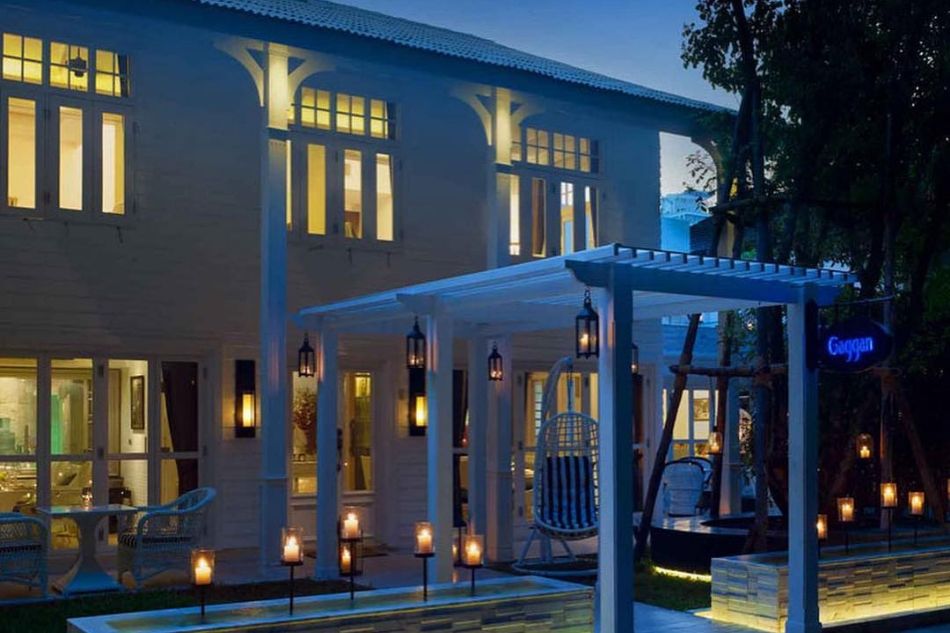 This is an Indian restaurant run by the Kolkata chef Gaggan Anand, but it would be difficult for someone unfamiliar with the country’s cuisine to figure that out. I went to Gaggan with a connoisseur of Indian food who raved about the restaurant, noting, “It’s a fantastic place for Indian restaurant fusion.” I, too, enjoyed most of the dishes there. We ordered a 24-course Indian menu that featured portions of about two mouthfuls each. For years, Gaggan has been on the list of the world’s 50 best restaurants – rising to the dizzying heights of fourth. What’s more, the restaurant has also entered the Michelin Guide, gaining one star; that’s just a way of saying it’s a restaurant whose high standards have been confirmed by more than a few measurements. Of course, the prices are accordingly quite high. But long story short, if you’re in Bangkok, you just have to try Gaggan’s food. But while the food was superb, one can’t say the same for the wine; take your bottle with you. Gaggan offers two servings at 6 and 9:30 each night; they also request that diners arrive promptly for their sittings, as there’s no place for you to wait if you arrive late. Heeding this advice, we arrived bang on time and sat down at our table. First, they asked if we had any allergies and then began the service – a 2.5-hour affair in which one of our 24 dishes came up about every 10 minutes, meaning we managed to enjoy the delightful menu without being overwhelmed. Now, in general, the Thais don’t speak great English, but Gaggan’s wait staff spoke fluent English, allowing us to understand just what we were eating. Gaggan is popular with well-heeled foreign visitors in Bangkok, so it’s always a chore to find a table in the perennially full restaurant. And as you know, wherever you go in the world, the more stars a restaurant gains, the more its prices go up. In the end, a trip to the two- Michelin-star Gaggan might be an expensive affair, but if you want to try fusion Indian food, it’s the place to do it.
NAHM
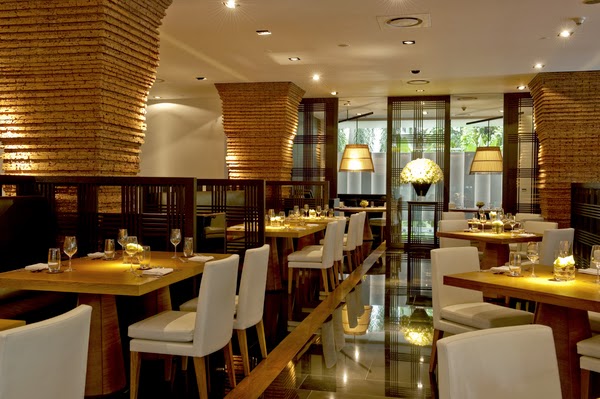 The Como Metropolitan Hotel is a veritable oasis in a bad part of town. I really loved this hotel, an architectural gem, to the extent that I resolved to stay there the next time I’m in Bangkok. And on this island of tranquility, there’s also a great restaurant, Nahm, a true Thai affair also has a Michelin star. They can accommodate you if you tell them that you don’t want your food to be too spicy. What’s more, they also have very good service. We went to Nahm on the day we were flying out of Thailand, enjoying a delicious meal and excellent wine from 6:30 to 8 p.m. before heading to the airport. And as far as I’m concerned, we paid more than a reasonable bill for that wonderful food, service, and wine. If you’re in Bangkok, make sure you go to Nahm and sample its food and atmosphere. And if you can, stay in the hotel upstairs.
SÜHRING
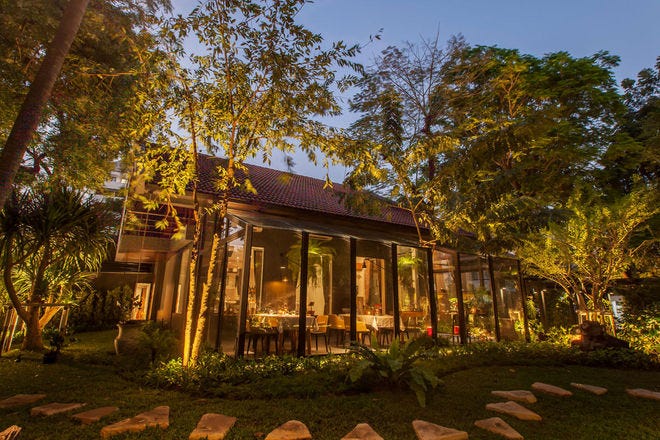 Sühring has grown from an exciting entrant into the global fine-dining conversation into one of the world’s true culinary institutions, now holding three Michelin stars while continuing to appear among The World’s 50 Best Restaurants. Set in a warmly decorated villa in Bangkok, the restaurant is the creation of identical German twins Thomas and Mathias Sühring, whose cuisine blends classical European foundations with delicate Thai influences and modern global technique. What once felt like a rising star has matured into a benchmark for precision, balance, and quiet elegance. The rhythm of the meal is one of Sühring’s great strengths: no course shouted, yet each lingered. The option to order wine by the glass encouraged exploration, makes the evening feel conversational rather than ceremonial. Today, with the weight of three Michelin stars behind it, Sühring feels less like a discovery and more like a landmark. Yet what is most impressive is that the soul of the experience has not changed. It remains a place where technical mastery supports — rather than overshadows — pleasure, and where a meal unfolds like a well- told story, lingering gently in memory long after the table is cleared.
SEEN
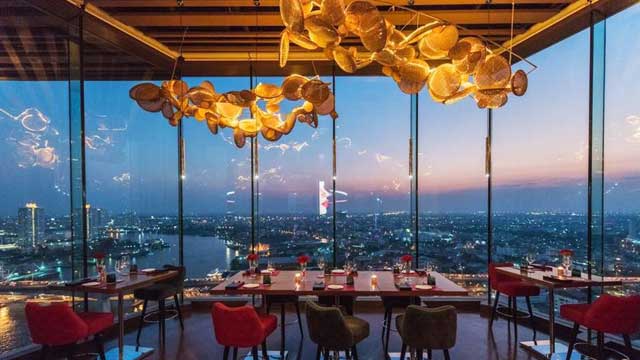 Located on the roof of the Avani Hotel, Seen is a bar and restaurant that offers commanding views of Bangkok (hint: it’s great at sunset). At one time, Seen had entered the list of the world’s top 100 restaurants, but it’s since slipped out of the list. Nevertheless, it has an exquisite fusion menu featuring a mix of European and global cuisine. You can choose either a set or an à la carte menu – both of which are well-priced. The wine list also has international wines, and you can order them either by glass or bottle. Tourists especially love coming here, meaning it’s often tough to find a place to sit. So if you are planning to come, make sure you make a reservation at least 10 days in advance. And because Thailand is a hot country, it’s probably a better idea to opt for cooked fish rather than raw variety.
DAMNOEN SADUAK
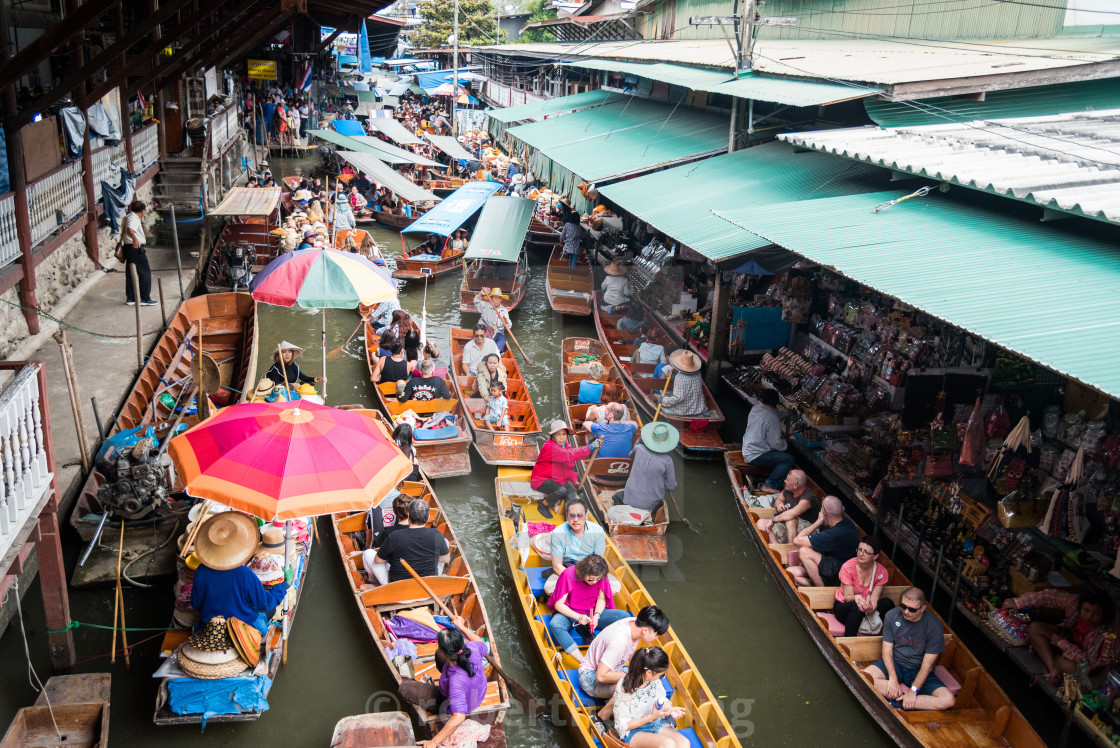 Bangkok also has a river, the Chao Phraya, but it’s now turned an ugly shade of gray. Around an hour from town, in a place that doesn’t have much settlement, there’s a floating market on the Chao Phraya called Damnoen Saduak. For a foreigner, it’s an original place bursting with color. If you’d like, you can join a tour of the market, or you can rent a boat and tour about. Normally, a day trip to the market from Bangkok should take about three hours, but our trip took all day due to a sudden downpour, meaning that we spent 4 hours on the road trying to get to a place that we were planning to tour for just a couple of hours. The market starts with a collection of shacks along the shoreline. Here, you can find both unique food (like roasted grasshoppers and noodles) and unique gifts (like silk shawls and handmade wooden products). For the entire length of the river, you can shop from these shacks without having to leave the comfort of your boat. After a while, the river widens, and you come across hundreds of boats like your own, all of which are located close to the shoreline. These boats sell any number of fast-food options, including potatoes, fruit, seafood, and the like. Naturally, you can also shop directly from these boats, again, without having to leave your boat – of course, however, it’s not exactly a place that accepts credit cards. In the end, however, it’s a highly commercialized touristic show. Cast an eye on those plying the waters around you, and you’ll struggle to see a local face. Originally, it was a market designed for Thais, but it’s become increasingly touristy over time; whereas there used to be 20 boats, they’re now 200, most of which are for tourists. Nevertheless, it’s a one-of-a-kind place. Given that I had traveled all that way, I bought papaya. They gave us a spoon, as well as half a papaya each, and we duly fulfilled the ritual of dumping the seeds into the river.