Paris, with its museums, architectural texture, magnificent views, and the romance it offers, is undoubtedly one of the most beautiful cities in the world. It is possible to experience the finest examples of French cuisine—recognized as one of the world’s best cuisines—at the restaurants of Paris.
In this city, there are hundreds of wonderful restaurants, some included in guides and some not, some Michelin-starred and others not. And new ones are constantly being added. That’s why every trip to Paris brings along a new surprise. French cuisine ranks first among the world’s cuisines. Within Paris’s magical atmosphere, eating exquisite dishes that have turned into a true art is another privilege. Since I often travel to Paris for business, I make a point of trying new restaurants each time. My list of favorites keeps changing and growing. A few months ago, I stayed in Paris for a while, continuing my work but also taking the opportunity to dine at some great restaurants. As you know, Paris is a very frequently visited destination. It’s romantic, it has a strong culture, and of course, it is also the very heart of French cuisine—the world’s best. The culinary scene in this city is constantly evolving.I will tell you about 12 Paris restaurants. Some of them have three Michelin stars, some have one, and some have none at all; but each is a place where you can say, “I had a great meal in Paris." Perhaps you’ve already been to these restaurants, but if you haven’t, I hope you’ll make the effort to go.
ANONA
The first restaurant I’ll talk about is Anona, run by a young team led by chef Thibaut Spiwack. This Michelin one-star restaurant also holds the Green Star certification, a quality label for environmentally responsible establishments. Sustainability criteria like using seasonal and local ingredients, limiting waste and water consumption are essential for this certification.As in many French restaurants, Anona offers a lovely lunch menu—at half the price of the dinner menu. If you want a proper dinner menu here, you’ll pay over €100. But at lunchtime, if you choose the three-course menu (starter, main, dessert), you can experience Anona for a very reasonable €49. The contents of this three-course menu are determined by the chef; you only specify your preferences, like meat or fish. Wine pairings are available for each dish at an additional cost. One interesting dish here is scallops. In France, fresh scallops are easily available, so I always try to eat them when I’m there. Among the starters, I also like the baby leeks served with mustard sauce. Another dish I recommend is the Corsican squid with beetroot, prepared with a hint of spice.
ARPÈGE
Arpège, where the famous chef Alain Passard has been creating wonders for nearly 25 years, is a beautiful Paris restaurant with three Michelin stars. Passard also considers himself a gardener, since all the vegetables and fruits he uses are grown in his own garden just outside the city. Strangely enough, despite this, the restaurant does not have a Michelin Green Star.Other ingredients—meat, poultry, fish, cheese—are sourced from the same suppliers he has worked with for years, all organic and additive-free. This way, he offers an organic menu. If you choose the vegetarian menu, dessert might be a crème brûlée made with milk and eggs. If you opt for the vegan menu, you’ll get a fruit platter with exotic fruits from his garden.It’s remarkable that Passard, now nearly 70, still works in the kitchen himself. Many chefs of his caliber expand their brands, opening restaurants in London, Las Vegas, New York, or Dubai, handing them to their protégés while only occasionally checking the menus. Passard has chosen not to follow this path; he runs only this one restaurant, and when I visited the kitchen, he was personally cooking.Don’t miss Arpège—it’s a fantastic dining experience. And if you want it to be more affordable, as with all two- and three-star Paris restaurants, I recommend going at lunchtime.
AUBERGE BRESSANE
 Some restaurants make me wish I lived upstairs so I could eat there every day. Auberge Bressane is one of those places. Run by chef Jean-Pierre Vullin, this restaurant’s cuisine is influenced by France’s western coast and a touch of Burgundy, which is evident from the wine list: very few Bordeaux wines but plenty from Burgundy. It’s a white-tablecloth restaurant with comfortable seating and reasonable prices. With a capacity of 30–40, it expands in summer with outdoor seating. It’s always fully booked at lunch and dinner, so reservations are essential.One of my favorite things here is the soufflé. When you order it, they bring you a beautifully puffed cheese soufflé, which is enough to satisfy your starter needs. At dessert, there are 8–10 varieties of sweet soufflés (chocolate, almond, vanilla, etc.), but they’re too sweet for me. In truffle season, I love the truffle pasta: you’ll want to wipe up the sauce with a piece of baguette.They also offer excellent local fish, sometimes daily specials not on the menu. Tables are usually for 6–8 people, so a group of 10 would have to split. The waiters all speak English, and there’s an English menu. For traditional western French cuisine, Auberge Bressane is a delight.
AUGUSTE
Auguste is a Michelin one-star restaurant offering a wide variety of dishes, with a focus on seafood. Chef Gael Orieux has also written cookbooks. His Cuisiner la mer features 90 seafood recipes (seabass, mackerel, whiting, abalone, oysters, prawns, etc.), while his Cuisiner la terre covers vegetables and fruits with 80 recipes.At his restaurant, he serves dishes from both books. I usually go for the crayfish and seabass—they’re always prepared perfectly. The monkfish, however, was slightly overcooked the last time I had it, so I’m hesitant to recommend it.As with other starred restaurants, lunch is more affordable. Salads are also excellent. Start with one, have crayfish, then your fish. Don’t forget the cheese platter: you can even request only goat cheeses or only blue cheeses.For dessert, both the crème brûlée and the chocolate soufflé are superb—the latter made with very dark chocolate and served with cream, and optionally ice cream. With its relatively moderate prices, Auguste is one of the restaurants I never miss in Paris.
BENOIT
Founded in 1912 as a bistro by Benoit Matray, Benoit remained a family business until 2005, when Alain Ducasse’s Maison Ducasse acquired it. Ducasse has preserved its spirit while adding his touch.It’s a restaurant where you can enjoy reasonably priced lunches and dinners. Alongside à la carte options, they also offer a fast lunch menu: starter + main, or main + dessert, designed to be finished within an hour. It’s popular with French businesspeople at lunch and with women meeting after shopping. Apart from Ducasse’s profiteroles, there are other signature dishes under his name. Centrally located and convenient, Benoit remains a charming spot.
BRIGITTE
Brigitte is the central France version of Auberge Bressane. Brigitte is almost 100 years old, with a simple menu of classic French dishes like onion soup. The menu always includes vegetables, while fish depends on the daily catch.You may have scallops as a starter and monkfish sauté as the main—both excellent. A sweet wine at only €7 a glass is remarkably cheap, since the bottle costs €25 wholesale, and the restaurant sells it at €29. I found this very fair. Brigitte is a great value-for-money option for lunch or dinner.
DOKI DOKI
Hand rolls occupy a unique and revered place in Japanese cuisine. They must be crafted fresh and eaten the moment they’re made. Any delay—whether in the journey from the kitchen, a pause at the bar, or a wait at your table—dulls the experience entirely. A perfect hand roll balances three contrasting sensations: warm rice, cold seafood, and crisp seaweed. The first bite should offer a satisfying crunch from the nori, followed by the clean, cool flavor of the seafood and the comforting warmth of the rice. When time interferes, that delicate harmony collapses—the rice cools, the seafood warms, and the seaweed, once brittle and fragrant, turns soft and lifeless.The ritual of eating a hand roll is intimate and immediate. Ideally, you sit at the counter, where the chef prepares and passes each roll across the counter seconds before you take a bite. It’s a fleeting, almost ceremonial exchange between chef and guest, rooted in respect for freshness and precision. In Paris, a small chain of four restaurants has embraced this philosophy with remarkable fidelity. Though their menus also include soups, small plates, nigiri, chirashi,
and a few desserts, hand rolls are the centerpiece—the reason to come. Diners can order a set of six, served sequentially, each arriving roughly every five minutes. The next roll is not made until the previous one has been eaten, preserving the perfect temperature and texture balance.The best hand rolls, contrary to popular belief, are cylindrical rather than cone-shaped. The cone form tends to lose its crunch as you reach the end, while a proper cylindrical roll—about the length of a cigarette and the thickness of a cigar—maintains its structure from the first bite to the last. Three or four bites are all it should take.This meticulous approach defines Doki Doki, whose four Paris locations have become a quiet sensation among sushi lovers. Although the concept traces its origins to the United States, the Paris outposts elevate the craft to an art form. Each roll arrives as it should— warm, cool, crisp, and gone in a few unforgettable bites.The ambiance at Doki Doki perfectly complements the precision of its cuisine. Each location follows a minimalist aesthetic—clean lines, warm wood, soft lighting, and an unspoken calm that lets the focus remain on the food. The counter is the heart of the space: sleek and narrow, with chefs moving quietly and efficiently behind it, assembling each roll with a kind of restrained choreography. There’s no clutter, no unnecessary motion—just the rhythm of rice, seaweed, and fish meeting in perfect proportion.Seats are few, which is deliberate. The experience is meant to feel personal, almost private. Conversations tend to fade into murmurs as diners wait for their next roll, watching the chef’s hands rather than their phones. The soundscape is subtle—perhaps the quiet hiss of the rice pot, the soft rustle of nori, and a trace of ambient jazz or Japanese lo-fi humming in the background.Clientele ranges from local Parisians who have adopted the place as a quiet lunch refuge to visiting food enthusiasts who’ve heard whispers of its excellence. Many discover it by chance, others make a pilgrimage after hearing that it’s the place in Paris to experience the hand roll properly—fresh, fleeting, and unforgettable. In a city defined by its devotion to dining, Doki Doki stands apart. Paris has long celebrated the long lunch, the tasting menu, and the art of lingering over food. Yet here, the experience is the opposite—immediate, ephemeral, and focused. Each hand roll lasts barely a minute, but in that minute, everything matters: timing, texture, temperature, and technique. It’s a kind of culinary haiku—short, precise, and deeply satisfying. And perhaps that’s why, in the city of long meals, this briefest of Japanese rituals feels so perfectly at home.
DIVELLEC
This one-star Michelin restaurant is bright and elegant, with white tablecloths, comfortable chairs, and reasonable prices. Located centrally on a corner, it has two dining rooms: one seating 20 and the other 10. At lunch, only the larger room is open, offering a view of the street; in the evening, both are open.It’s relaxed, with enough space between tables for easy conversation. The menu is à la carte, and prices are moderate despite the quality.They serve only seafood and vegetables: scallops, crayfish, sole, sashimi of tuna, salmon, or seabass, and even a tuna tartare version of the French classic steak tartare. A delightful place for fresh, well-prepared seafood.
KEI
Kei, a three-Michelin-star restaurant, is run by Kei Kobayashi, a Japanese-born but French-raised chef who cooks exclusively French cuisine. There is no Japanese influence. It’s a very elegant, 20-seat restaurant with white tablecloths and comfortable chairs. Once you specify your meat or fish preferences, the menu is served—accompanied by amuse-
bouches before and after the main courses.As in other three-star restaurants, they send you home with a small treat package. Intimate, refined, and absolutely top-tier.
LE PUR
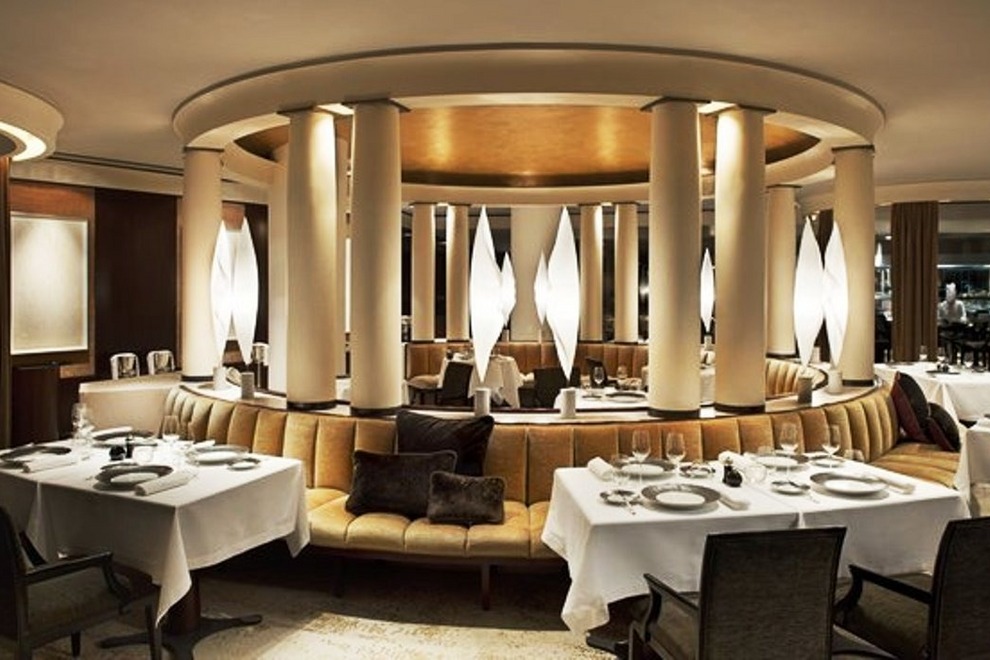 Located inside the Park Hyatt hotel, Le Pur has one Michelin star. It’s closed on Sundays and serves only dinner. The food is light, the service is wide-ranging, and the prices are reasonable for its quality.On earlier visits, I found the wine program lacking, but recently I noticed two female sommeliers had joined. They created brilliant wine pairings—even adapting spontaneously when we replaced the meat dishes with fish. Each explained the wines in detail, introducing me to labels I hadn’t known before.Le Pur passed my sommelier test with flying colors.
MONSIEUR BLUE
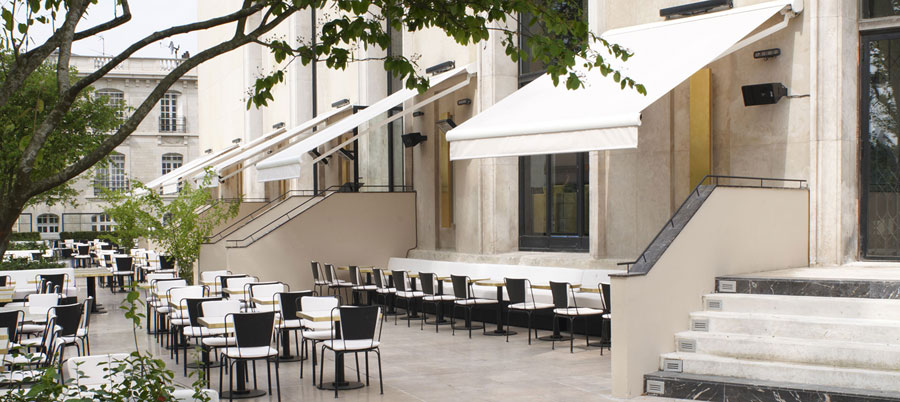 This restaurant is lively, with all age groups, background music, a big bar, and a view of the Eiffel Tower. You can dine in the garden in summer or inside in winter.I’ve been here a few times for business dinners and enjoyed it. There are two dinner seatings: 7:30 and 9:30. If you want a quick meal, book the first; if you want to continue into the night with drinks and music, choose the second.As the evening goes on, the music livens up, the place turns into a quasi-nightclub, with stylish people and sometimes celebrities creating an energetic atmosphere. Unlike stiff French restaurants, Monsieur Blue offers fun and vibrance.I once brought my daughter and her friends here for the second seating—they loved it and stayed for hours without boredom. It’s not a place for quiet fine dining, but for lively, fun evenings with an Eiffel Tower view at reasonable prices.
NANAUMI
Nanaumi is a genuine Japanese restaurant, run by a Japanese chef and two Japanese women handling service. I usually eat eel at Japanese places. The eel’s skin is removed, it’s cut into pieces, seasoned, and cooked in a special sauce that is replenished daily for years, gaining refinement over time. If a restaurant has been around 20 years, its sauce is also 20 years old. Each restaurant’s sauce is unique.At Nanaumi, the eel and its sauce were fantastic. The eel’s taste took the lead, with the sauce in the background— just as I like it. Highly recommended.
YOSHINORI
I stumbled upon Yoshinori by chance. Thinking it was a Japanese restaurant, I went in—but it turned out to be a French restaurant with Japanese influences. Located in Saint-Germain- des-Prés, in a street filled with small Japanese restaurants (some Michelin-listed), Yoshinori is run entirely by chef Yoshinori Morié. He does everything: takes orders, cooks, serves, and explains the dishes.With only 12 seats (three 4-person tables), he has managed to earn a Michelin star. There’s no fixed menu— he prepares whatever he feels like, based on your meat/fish preferences given at reservation. The open kitchen lets you watch him work, and though there are no tablecloths, the chairs are comfortable and the atmosphere is cozy. Centrally located and utterly unique.
THREE MICHELIN STARS BURN A HOLE IN YOUR WALLET
Restaurants aiming for three Michelin stars usually serve amuse-bouches at the beginning, end, and when bidding farewell. Some win the third star, others don’t—but without such gestures, they have no chance. At three-star restaurants, dinner for two costs at least €500, excluding wine. With wine, it can climb much higher. I believe these prices are exaggerated, and there’s no need to frequent such places regularly.
WHY IS A WIDE WINE LIST GOOD?
A broad wine list has many advantages. If you’re knowledgeable, you make your own choice. But if there’s a skilled sommelier, you can learn something new. You might discover an unusual wine at a reasonable price through their suggestions, broadening your horizons.To achieve this, a sommelier should ideally have access to at least 1,000 wines. In Turkey, that’s rare. But in Paris, the restaurants I’ve called “good wine list places” have cellars with at least 2,000 bottles. In fact, the economic value of such a cellar may exceed the restaurant itself.